The Valerie Fund News
Born of grief, this NJ fund transformed childhood cancer care
In 1970, Ed and Sue Goldstein's 3-year-old daughter, Valerie, was diagnosed with Ewing’s sarcoma, a form of bone cancer. Six painful years followed as the family discovered how few services New Jersey offered for children with cancer.
“There was only adult oncologists, and the treatment of the two are totally different,” Ed Goldstein recalled in a recent interview. He remembered the tense hour-and-a-half trips into New York and back for Valerie’s care. She often got nauseated on the long rides home after chemotherapy.
Driven by that experience, the Goldsteins created The Valerie Fund, a group that would help reshape childhood cancer treatment in the area by bringing support closer to home for families. A half-century later, The Valerie Fund runs eight treatment centers in New Jersey and New York and serves 6,500 children with cancer and blood disorders annually.
Tara James, a pediatric oncology clinical social worker at The Valerie Fund’s Newark Beth Israel Medical Center site, meets with a young patient at the center.
“From their grief, they became change-makers,” spokeswoman Bunny Flanders said of the Goldsteins. “They brought pediatric oncology to New Jersey for the very first time.”
The family was touched by tragedy again in 2001, when the Goldsteins' older daughter, Stacy, died of breast cancer at age 37. For their decades of philanthropy supporting cancer treatment and research, Ed and Sue were inducted into the New Jersey Hall of Fame in 2016.
The Valerie Fund spent about $7.5 million on program services last year, including nearly $930,000 in emergency family support and more than $700,000 in scholarships, its 2025 impact report said.
The organization will hold one of its biggest yearly fundraisers on June 6. The Valerie Fund Walk and 5K Run, which has a $1 million goal this year, will take place at Verona Park in Verona, with the run beginning at 8:30 a.m. and the walk at 10 a.m.
The fund helps pay for services many families couldn’t otherwise afford, Flanders said, including specialists who help children cope with illness, mental health counselors, financial support and a camp.
For families, those efforts can be the difference between just getting through treatment and keeping a household together.
The Goldsteins, who live in Warren, decided to start the organization just three weeks after Valerie died in 1976. Sue Goldstein recalled Ed coming home from his work as a kitchen remodeler with an idea: “What do you think about starting an organization in Valerie’s name?”
Sue Goldstein said she was startled, and then immediately on board.
Their early goal was simple: “We wanted to have every child from New Jersey treated close to home,” Ed Goldstein said.
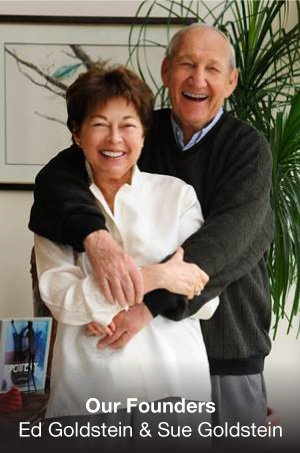
Ed and Sue Goldstein, founders of The Valerie Fund, stand together 50 years after turning the loss of their daughter, Valerie, into a statewide support system for children with cancer and their families.
Navigating 'the worst moment of their life'
Tara James, 28, is a pediatric oncology clinical social worker at The Valerie Fund’s facility at Newark Beth Israel Medical Center. She gets involved as soon as a doctor is ready to share a diagnosis.
“When I’m first meeting a family, it’s usually when they’re finding out their child has cancer, which is the worst moment of their life,” James said.
Her work begins in rooms crowded with fear and confusion. She helps families understand the diagnosis and treatment plan. If a family needs financial aid, she can help with that, too. She can help a family explore options for leave so parents can keep their jobs.
For families, the emotional shock is often overwhelming.
“You had this box of dominoes, and everything was perfect. Then your child is diagnosed with cancer. It’s something no parent wants to hear,” James said.
The Valerie Fund has a team at Newark Beth Israel that includes social workers, a psychologist and other staffers who help children cope with hospital stays, a specialist who works with schools so children don’t fall behind, and a mind-body specialist who helps with stress, emotions and pain management, she added.
“No family, no child, can go through all this medical stuff without having the psychosocial support available,” James said.
Tara James leads an art therapy activity in which mothers of children with cancer break ceramic bowls, paint the pieces and glue them back together. "No family, no child, can go through all this medical stuff" without support, she said.
One recent North Jersey case that got assistance from The Valerie Fund involved a 6-year-old girl who was diagnosed last summer. The girl required months of chemotherapy and radiation. Her family, already behind on rent and without insurance, received an eviction notice, James recounted.
She worked to get their insurance processed and connected the family with financial help through The Valerie Fund and other foundations. That helped cover overdue rent and prevented their eviction.
Financial instability is one of the biggest problems families face after a cancer diagnosis.
“It’s easy to pass judgment and say people don’t want to work or could be working more," James said. "But when you have a sick child who’s immunocompromised, can’t go to school and needs multiple medications at home — they’re having different side effects, have a fever and have to go to the emergency department at 3 a.m. — it’s not sustainable for parents to work.”
Breaking bowls and filling holes
The Goldsteins said those pressures were part of what pushed them to build emergency help into the organization. Families can suddenly find themselves unable to pay for rent, utilities, transportation or even burial costs.
“Cancer is a family disease,” Ed Goldstein said. “If they can’t get help, we do it. We make sure that the family is whole.”
The work of the cancer centers stretches beyond crisis management. James, who is also trained in art therapy and palliative care, runs weekly support groups for families and uses art with children and parents to help them process fear, loss and change.
One project asks mothers to break ceramic bowls, paint the pieces and glue them back together, filling the cracks with gold paint.
“It comes from an ancient Japanese art tradition of breaking a bowl that represents things like falling apart, not being able to control things,” James said. “And then painting each piece and gluing it back together to represent resilience and being able to move forward and making something new out of something that has been broken.”
For Jess Torrisi, 48, of Warren, the support became personal when her son John’s health took a frightening turn.
John, now 15, was 8 years old when he suffered a brain bleed on Feb. 12, 2019. At first, Torrisi said, it seemed like another headache. But then her son began vomiting. He fell asleep and wouldn’t wake up.
“We ended up at Overlook [Medical Center] in the emergency department," she said. "They scanned him and they saw a brain bleed."
John spent a few days in a coma.
When he woke, “he had to relearn eating, talking, walking — everything,” Torrisi said. “It was like he was a newborn again.”
Doctors said the bleed was caused by an optic glioma, a tumor entwined with John's optic nerve. The cancer left long-term complications, including hypothalamic obesity, which makes someone feel constantly hungry and gain weight, and diabetes insipidus, which causes dangerous dehydration.
John Torrisi is pictured in a hospital room with a Toy Story theme for his birthday featuring balloons and toys, a small gesture that helped brighten a difficult day for him and his family.
The tumor began growing again in late 2024, and doctors discovered that it had spread to his spine. John began chemotherapy last April. This was when his mother met a social worker with The Valerie Fund.
“She handed me a backpack full of information on what to expect with chemo and resources," Torrisi said. "It had business cards with literally every person I would potentially need to reach out to."
The support ranged from help navigating medical devices and financial needs to periodic check-ins from social workers and staffers who helped make chemotherapy less frightening.
Torrisi also praised a child-life specialist who formed a close bond with her son.
“For his birthday, Kristen actually handled setting up a whole area for John where he was going to have chemo that day. She decorated it with Super Mario and Toy Story and stuff like that,” Torrisi said. “I just really appreciate everything that the Valerie Center has done for us.”
Torrisi offered advice to other parents facing a serious diagnosis.
“You want people there that you can trust, that’ll listen to you and that will answer your questions and help you understand the situation," she said.
More: These NJ cancer survivors guide new patients through 'the storm' after diagnosis
Childhood cancer survival rates
Fifty years after the Goldsteins founded The Valerie Fund, treatment is more advanced, survival rates have improved and the network around patients has grown more sophisticated.
About 58% of children survived at least five years after a cancer diagnosis in the mid-1970s, when the Goldsteins started the fund. Today, with improvements in treatment and detection, that figure is about 85%, according to the American Cancer Society.
Many of the survivors aided by The Valerie Fund grew up and joined a medical or helping profession, Sue Goldstein said. That’s one of the things that make her proudest.
One of James’ favorite moments comes as treatment is finished, when a child rings a bell to celebrate the end of chemotherapy.
“Ringing the bells — people are always tearing up, and it’s so special and such a relief,” she said.
This article originally appeared on NorthJersey.com: NJ family's grief led to groundbreaking childhood cancer fund
Gene Myers, NorthJersey.com
Wed, May 27, 2026 at 4:30 AM EDT
Latest News View Archives
-
Born of grief, this NJ fund transformed childhood cancer care
In 1970, Ed and Sue Goldstein's 3-year-old daughter, Valerie, was diagnosed with Ewing’s sarcoma, a form of bone cancer. Six painful years followed as the family discovered how few services New Jersey offered for children with cancer. “There was only adult... read more » -
The Valerie Fund Welcomes Jersey Mike’s Franchise Leader Evan Mayer to Board of Trustees
Owner of Mayer Holdings, a New Jersey LLC that operates Jersey Mike’s Subs franchises [Maplewood, NJ, April 14, 2026) The Valerie Fund is pleased to announce the addition of Evan H. Mayer to its Board of Trustees. A distinguished... read more » -
The Valerie Fund’s Annual Walk & 5K scheduled for June 6th
Fundraiser for kids battling cancer and blood disorders in Verona Park Marking Fifty Years of Hope and Healing For Our Kids (April 8, 2026, Maplewood, NJ) Now in its 21st year, The Valerie Fund Walk & 5K Run, presented... read more » -
The Valerie Fund Announces 50th Anniversary
The Valerie Fund is marking 50 years of hope and healing for children with cancer and blood disorders and calls for patients and caregivers to reconnect MAPLEWOOD, NJ (January 27, 2026) - The Valerie Fund, a nonprofit dedicated to... read more » -
The Valerie Fund announces designers participating in The Clark Rogers House, A Designer Showhouse to benefit children in our area battling cancer and blood disorders
The Valerie Fund announces the interior designers selected for The Clark Rogers House, a designer showhouse benefiting the organization. The Designer Showhouse will be open for public tours April 30th through May 24, 2026. Located just steps from Plainfield’s... read more »
The Valerie Fund Walk/5K Presented by Ed and Sue Goldstein and JAG Physical Therapy
Verona Park
Saturday June 6, 8:30 am